
Your Body Is Not a Machine.
Manoush Zomorodi on why knowledge workers need to think like athletes — and what five minutes every half hour can actually do.
For most of my adult life, I have treated my body as the vehicle that carries my mind to the next meeting. I was never much of an athlete as a child and I leaned into the kind of work that embraced my strengths. Mostly, this involved using my brain. I was an endurance mathlete, I participated in Olympics of the Mind. (Well, at least until the highly aggressive U. S. Olympic Committee made the organization change its name to Odyssey of the Mind, but you get my point.)
It took Manoush Zomorodi to remind me: “You are a meat bag that is holding your brain inside of it.”
🎧 Check us out on LinkedIn, YouTube, Apple Podcasts or Spotify 🎧
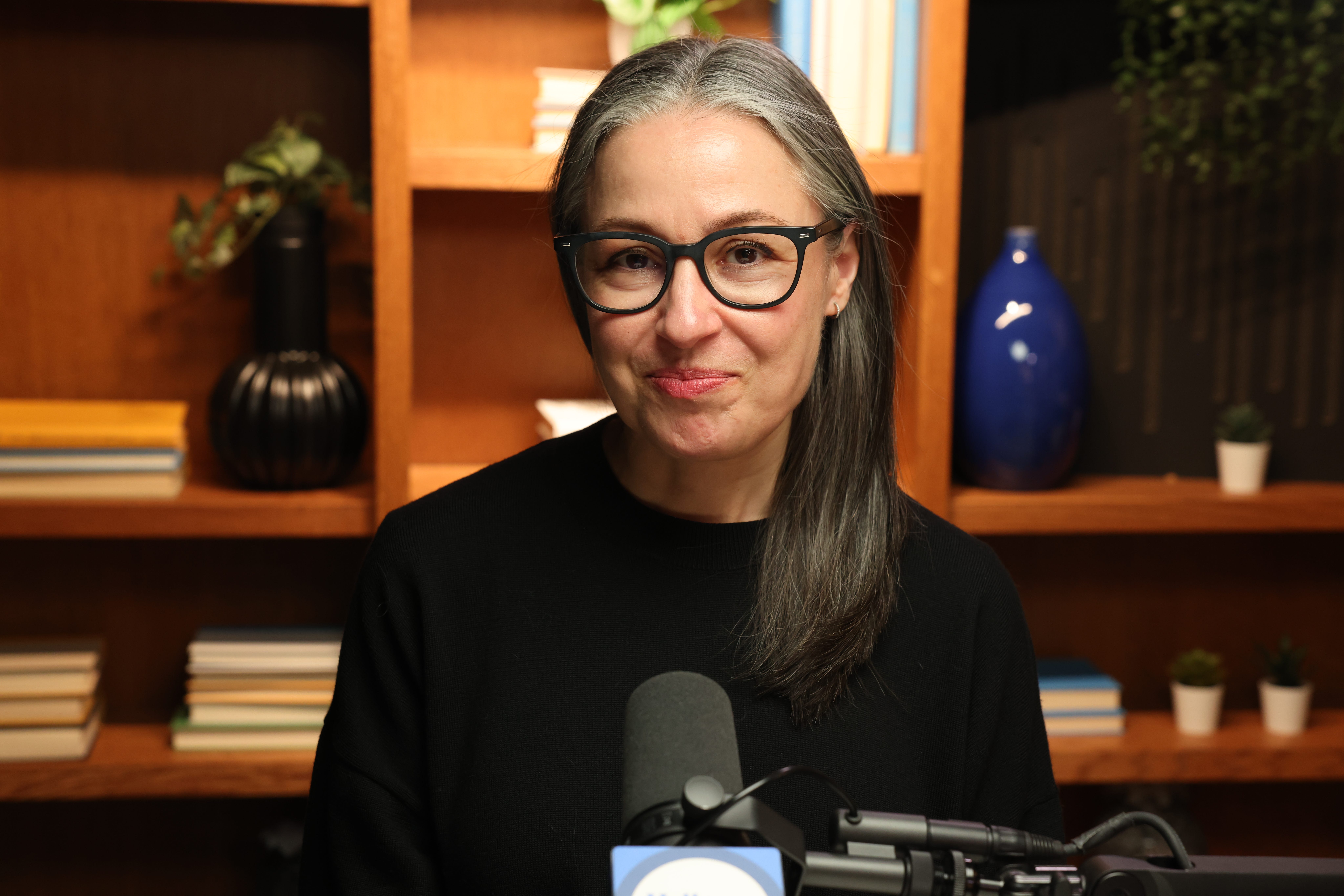
Manoush Zomorodi is host of NPR’s TED Radio Hour and author of a new book, Body Electric: The Hidden Health Costs of the Digital Age and New Science to Reclaim Your Well-Being
Your body has its own intelligence
Yeah, that physical body. I know it. And I take care of it! I really do. I exercise several times a week. I take my magnesium at night. And do you know how many steps I get in every morning? All so that I can arrive at the office and sit down at my computer…and sit, and sit….and sit. In the last few years, even going to meetings has involved sitting. Rather than shuffle to another room, I hit the button in my calendar invite and transport myself to a virtual room.
It was early in the pandemic that Manoush realized this approach to work was bumming her out and making her generally both less healthy and less productive…and it was probably doing that for everyone else, too. So, because Manoush is a journalist and because she’d already spent a decade building a body of work around attention, technology, creativity, and the human nervous system, she started to investigate.
Here’s what Manoush spent three years researching: the average American adult interacts with media for over 12 hours a day. We sit for nine or ten hours at a stretch. This is not good for us! Type 2 diabetes in young people has doubled over the past 20 years, to name just one terrible outcome of a sedentary lifestyle. Three out of four American adults have at least one chronic illness — many of them preventable.
Her suspicion was that the culprit isn’t just what we eat. It’s that we don’t move.
So she teamed up with physiologist Keith Diaz at Columbia University Medical Center and invited 23,000 people to try an experiment: five minutes of gentle movement every thirty minutes.
One solution, it turns out, is almost insultingly simple: five minutes of gentle movement every thirty minutes largely offsets the harms of a sedentary lifestyle. She’s not telling us to go to the gym here, or to start a rigorous training course (though she’s obviously a big fan of her pilates class). Manoush suggests that by moving around a bit on such a regular cadence, we can go a long way toward addressing the harms that knowledge work has introduced.
That’s great for our physical health, and also helps us accomplish more. Our thinking is fresher when we move, our ability to solve problems becomes snappier. Maybe best of all, we’re all in better moods.
If we want to win the adult version of Olympics of the Mind, we’d do well to think of ourselves as information athletes.
“Google Sheets is my tool,” she told me, “and I need to use my body and maximize its ability just to be able to manage all the things I have to do.”
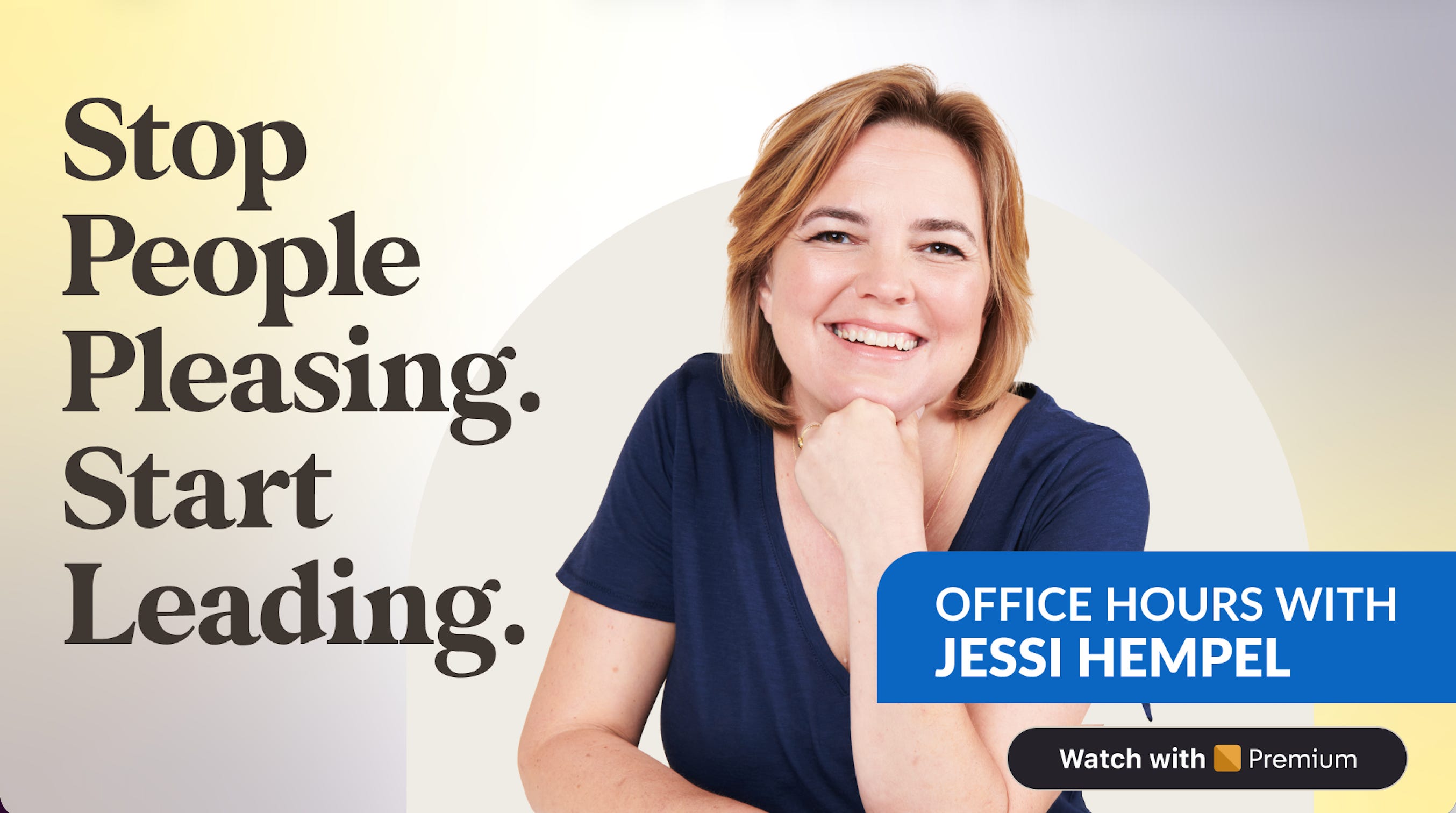
Office Hours is back!
Office Hours is our monthly gathering for people who listen to Hello Monday and want to go deeper — into the ideas, the questions, and the connections that emerge from the show. It’s a space to reflect together on work and life, ask the questions you might not ask anywhere else, find support through transitions, and celebrate each other’s wins. Whether you’re a longtime listener or brand new to the community, you’re welcome here. Join us May 13 at 3pm EST for what producer Sarah Storm lovingly calls “the kindest place on the internet.” RSVP right here!
Following up on last week’s letter, a few reads…
AI isn’t coming for your job. It’s coming for your mind. (by Tom Slater/Ballie Gifford)
“Verification without prior mastery risks becoming a superficial check rather than a genuine evaluation. Just as literacy gave us something new by repurposing something old, AI is reshaping the brain’s allocation of cognitive resources. The trade may be worth making. But right now, most people are making it without realising there is a trade at all.”
AI systems are about to start building themselves (by Jack Clark/Import AI)
It seems appropriate to pair the above reading with a recent newsletter by Anthropic cofounder Jack Clark, who writes there’s a likelihood that very soon, AI will begin to build itself. In other words, AI will operate its own R&D department. “If that happens, we will cross a Rubicon into a nearly-impossible-to-forecast future. More on this later.”
What’s this newsletter about again?
I’ve spent 20+ years covering tech from the inside for BusinessWeek, Fortune, and Wired. I’m on staff as a senior editor at large at LinkedIn. My mission is to close the gap between the people building the future—and those of us living it.